

4-Session Training Course
Ceramics course in Lisbon
This ceramics course in Lisbon, at FICA Oficina Criativa, is an approach where you will develop a more consistent relationship with clay. A CERAMICS WORKSHOP, The 4-session, 11-hour course is a complete proposal for those who want to explore ceramics further and better understand its transformation process.
Included materials
All the materials needed for the workshop are available, as well as baking.
Duration
The course lasts 11 hours, divided into 4 sessions (one per week)
More than a ceramics workshop
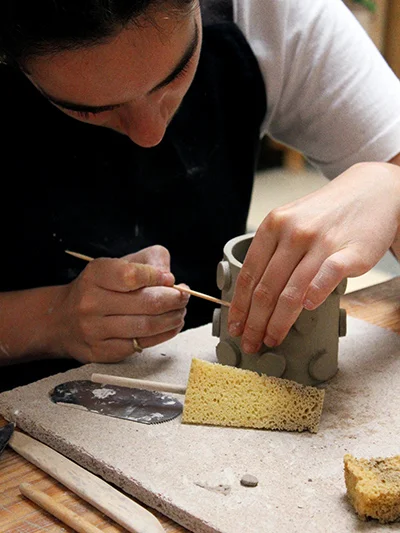
Unlike a one-off workshop, throughout the sessions of the Ceramics Course - Ceramics Workshop - you'll go through the various stages of the ceramic process: from the basic principles and techniques of hand-forming, to the application of textures and color in the leather phase, to the glazing of the pieces.
It is not necessary to attend flash workshop before this course. Still, if you do both, you can consolidate and deepen some of the techniques in common.
What you'll learn on the Ceramics Course
In the ceramics course – Ceramics Workshop —you’ll learn the four main hand-building techniques—slab, coil, rolling, and hollow block—and explore different approaches to decoration and glazing, both on raw clay and bisque, ranging from textures to color, using engobes and high-fire paints.
In the final phase, once your pieces have been glazed, you'll also learn the glazing process by applying a finish to your own pieces.
This is the most comprehensive introductory ceramics course we offer, designed for those with no prior experience who want to learn in a structured way.
Over the course of the four sessions, you’ll follow nearly every stage of the process: you’ll start with plastic clay and finish by glazing the pieces you’ve created. With ongoing practice, you’ll gain confidence, independence, and a deeper understanding of the material and techniques.
Manual Forming Techniques
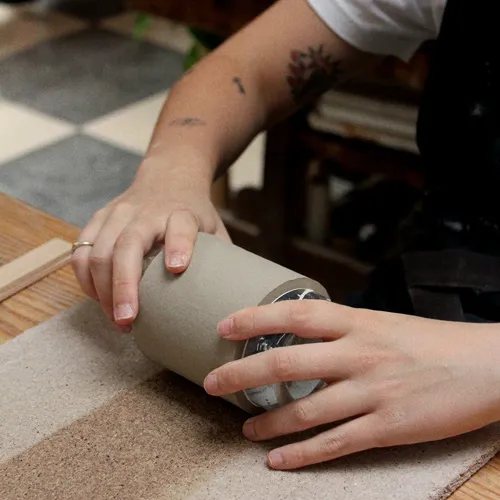
Ballast technique
Construction from slabs of clay, worked and joined together to create structured shapes. In this technique, you will develop a mug from a mold and learn how to glue a base.
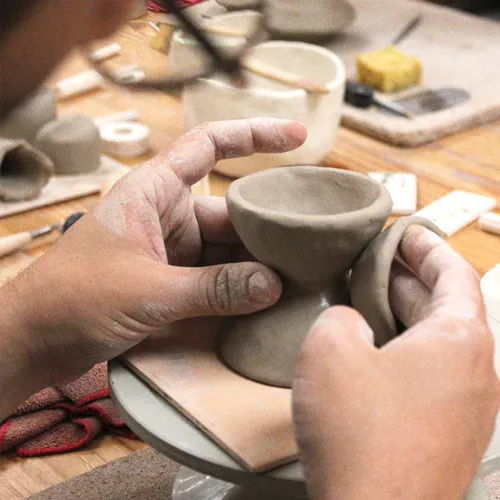
Ball technique
Modeling from a ball of clay, shaped by hand pressure. It's a freer approach that can result in bowls, cups or less utilitarian pieces.
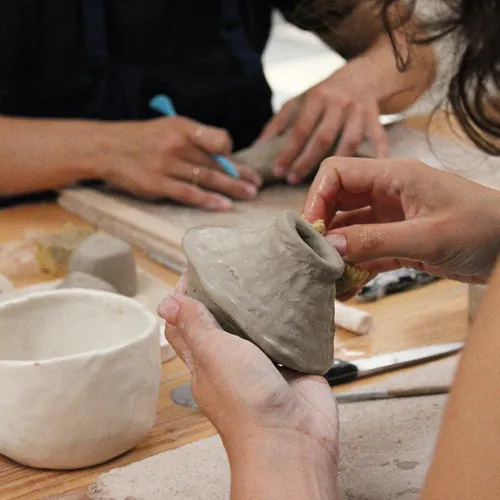
Roller technique
Construction by overlapping rollers, developing vertical shapes. You will create a piece, where the diameter and length of the rollers define the final shape and allow for various possibilities.
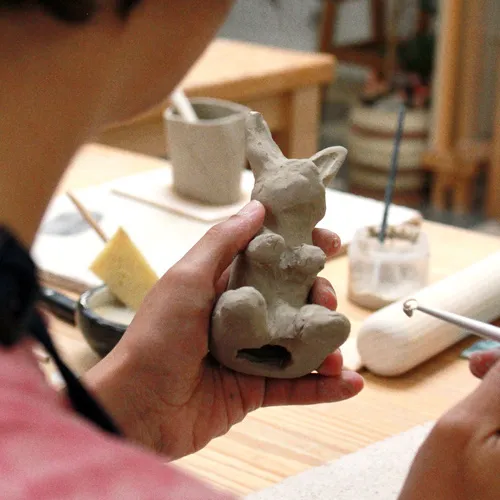
Occupied Massif Technique
Modeling from a solid block, which is then hollowed out to create interior volume. This technique is ideal for boxes, small sculptures or figures such as busts and animals.
Decorating and Cladding Techniques
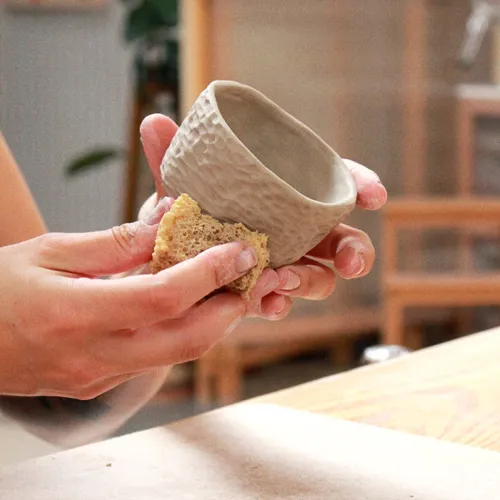
Textures
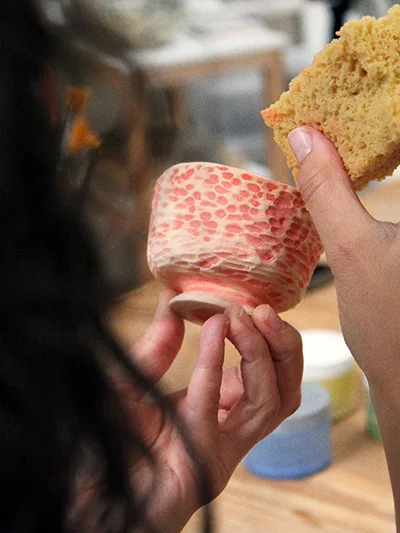
Explore patterns and reliefs in the still raw clay, using tools to create textured surfaces.
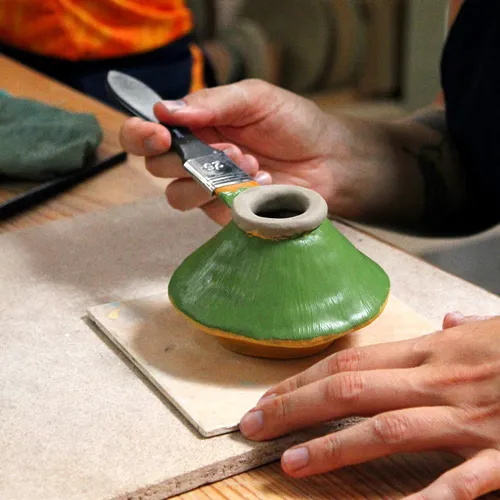
Painting on raw clay
Application of engobes on the piece in its leather state, allowing it to be colored before the first firing.
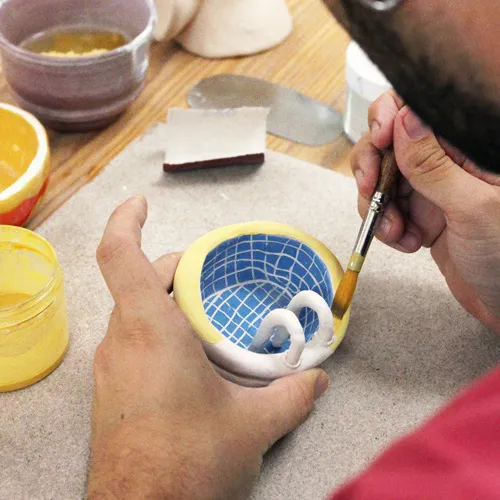
Chacota painting
Painting directly on the piece with high-fire paints or ceramic mines, before the second firing.
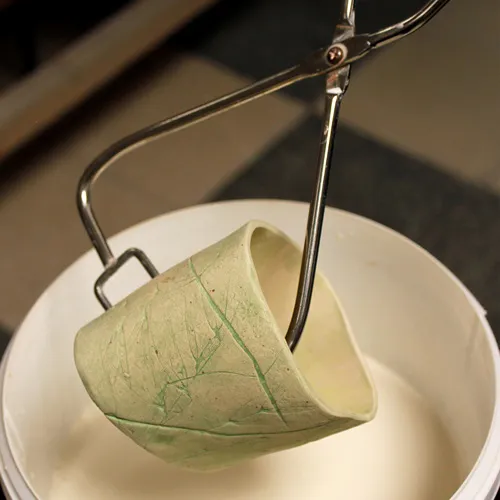
Glazing
Final glaze finish to protect and enhance the colors and textures of your pieces.
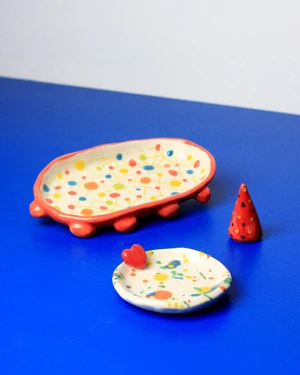
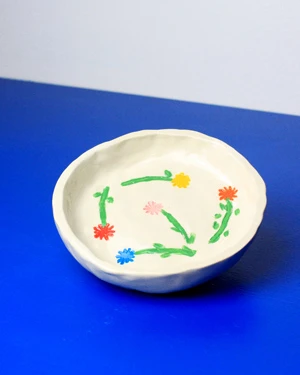
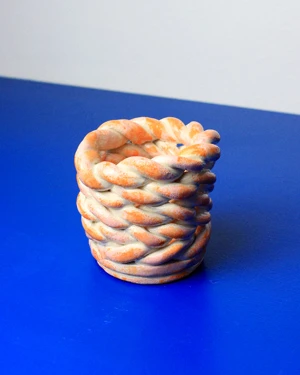
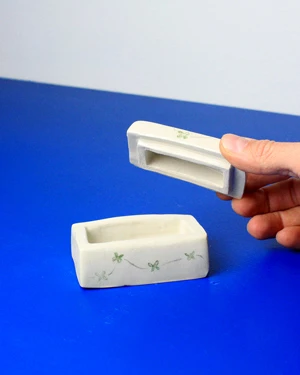
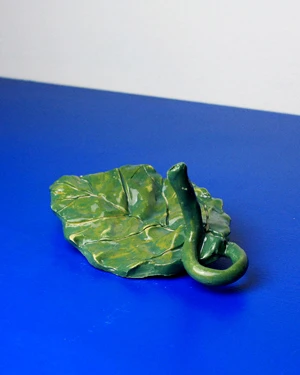
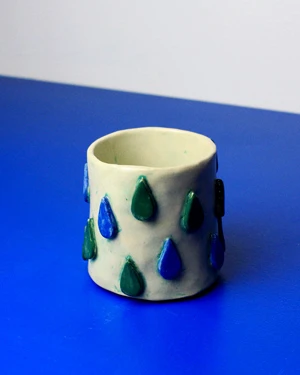
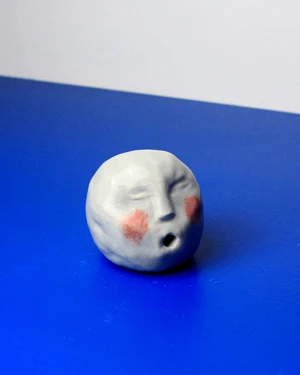
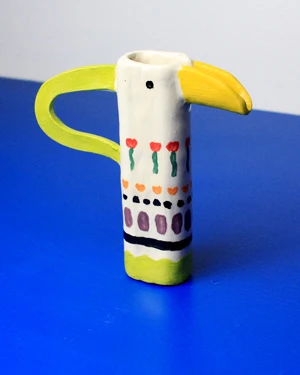
Examples of pieces created by participants
Pottery for Beginners
These are some of the pieces created by participants in our ceramics courses, who had no prior knowledge of the techniques.
During the course, students learn various techniques for shaping and decorating pottery, ranging from slab, coil, ball, and hollow-body construction to decorating on unfired clay, slip, and glazing.
Objectives
This is the most complete manual forming training we offer, designed for those with no previous experience. Throughout the sessions, you'll go through practically every stage of the ceramic process - from the clay in its plastic state to the final glaze, where each participant finishes their own pieces.
As the four sessions continue, you will deepen your practice and your relationship with the material, gradually gaining confidence and autonomy in working with ceramics.
Final Results
You get to keep the pieces you create—at least four, one for each technique.
After the ceramics class, the pieces will undergo a final firing, which we will handle. When they are ready, we will send you an email with pickup instructions, usually one to three weeks after the class ends.
Ceramics course instructors

Rita Daniel
Founder and trainer at FICA Oficina Criativa. She has a degree in architecture and specialized courses in ceramics at ARCO and CENCAL. She is also the manager and pedagogical coordinator of FICA's training courses.

Mariana Costa
FICA trainer since 2024. She has a degree in Sculpture from the Faculty of Fine Arts, a stint at the António Arroio Art School and courses at CENCAL. She also continues her artistic activity as a ceramist.
The workshop information on this page is subject to change and should be confirmed on the workshop page.
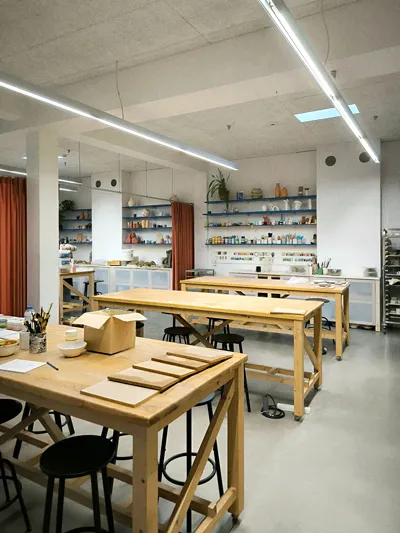
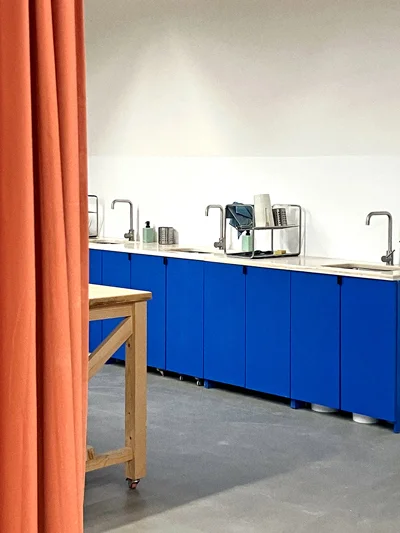
All the ceramics workshops scheduled on this page take place at our workshop in Lisbon, at Rua Bernardo Lima 10C.

FICA has established a partnership with Graffito, online store specializing in ceramic materials, including clays, engobes and tools.
The materials included in the ceramics workshops - clay, engobes, paints, glazes, tiles - are produced in Portugal and supplied by Graffito.
FICA Workshop Calendar
How to register and take part?
➔ Click on the workshop to see more details and register
➔ Add the number of seats you want and finish the purchase process
October
November
December
No workshops
January
No workshops
What they say about the ceramics course
Here are some opinions from participants who have already attended the ceramics workshop at FICA

★★★★★

Daniel Gomes
We really liked ceramics course with Mariana. It was a lot of fun and we learned a lot!
★★★★★

Margarida Correia
I loved doing the Ceramics Workshop. It was my first experience with this art and I'm eager to continue. I highly recommend it!
★★★★★

Sara Figueiredo
I went to a ceramics workshop and I recommend it - for those who have never done it and for those who have the bug lying dormant. You'll definitely enjoy it! Even though there are several workshops going on at the same time, the space is very quiet and the staff impeccable.
★★★★★

Tomás Parreiro
A wonderful experience. Rita is incredible. I did the ceramics workshop. I highly recommend it!
Frequently Asked Questions and Conditions of Participation in the Ceramics Course
Frequently asked questions about the FICA Oficina Criativa ceramics workshop.
Do I need to have prior knowledge of ceramics?
No. The ceramics course is designed for people with no prior knowledge; the techniques are taught throughout the sessions, from preparing and shaping the pieces to decorating, drying, firing, and glazing them.
What techniques are taught in the ceramics course?
The course explores various techniques for building and decorating ceramic pieces, including slab, coil, ball, and solid-hollow construction, as well as decorating on bisque and chamotte and applying glaze. The different stages allow students to follow the process of a piece from its construction through to the final firings.
Do I need to do a workshop first?
No. This Ceramics Workshop can be taken independently, without the need to take part in other introductory workshops.
There are other workshops that can be taken after the Ceramics Workshop, such as the Nerikomi Workshop, Stencilling and Ceramic Decals.
What's the difference with a workshop?
The Flash Ceramics Workshop is a one-off experience, focusing on the basic techniques of lasering and balling. It does not include painting, so the pieces are left in the natural color of the clay, white (faience). The Ceramics Workshop is a more complete 4-session course, including decoration, glazing and monitoring the various stages of the ceramics process.
Are materials included in the ceramics course?
Yes, the materials needed for the ceramics course are included.
The clay, engobes, paints and glazes used in this training are made in Portugal and supplied by Graffito. A partnership with the leading Portuguese brand specializing in ceramic materials.
Cooking is included.
Can I miss a session?
However, if a trainee misses a training session, FICA is not responsible for replacing or making up that session. We can look into the possibility of making up (except for the first session) for our open workshop on Tuesdays, depending on availability.
For questions about registration, payments or cancellations, please consult the conditions on each workshop page and at terms and conditions