
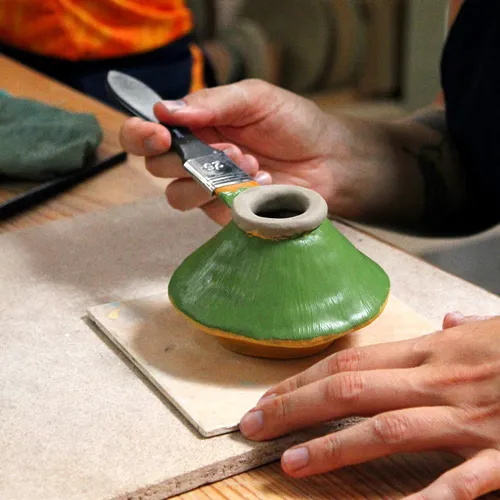
Flash Workshop or Ceramics Workshop: which should I choose?
If you come to our website and want to learn how to make ceramics, you're almost certainly going to attend two workshops. You'll find the Flash Ceramics Workshop and the Ceramics Workshop, but you don't know which one to choose.
Let's try to simplify the answer to Flash Workshop or Ceramics Workshop. If you just want to experiment out of curiosity, choose Flash. It's cheaper [60€] and shorter [3 hours]. If you're interested in learning a bit more, choose the Workshop. It's longer [4 sessions] and although it's more expensive [165€], if you divide it by 4 sessions, each one costs 41.25€.
There's no right answer, it depends on what you want. But there are concrete differences between the two formats, and it's worth understanding them before you decide.
⧗ reading time - 5 to 6 minutes ⧗
What are the two formats?
Flash Ceramics Workshop is a single 3-hour session. It's an introductory format, ideal for those who have never worked with clay before and want to understand what it's all about before committing to more. It costs €60 and includes firing.
Ceramics Workshop There are 4 sessions of 3 hours (the last session is 2 hours), usually spaced a week apart. It's the most complete training we have in manual forming. It costs 165€, including firing.
You don't need to have done the Flash Workshop to do the Workshop. They are independent formats, although you can do both if you want to learn more about the techniques they both have in common. You'll always end up with different pieces: in the Flash you'll have clay-colored, white pieces. In the Workshop you paint the pieces.
What you learn from each one
Hand modeling is the starting point for almost everyone. You work the clay directly with your hands, building the pieces using techniques such as balling, rolling or solid hollowing.
You don't need special coordination or previous experience. Of course, some will do better than others. It's not a competition. We often say that it's only easy for those who don't do it. And for us, having you in a workshop to learn is already an incredible step.
The potter's wheel is another discipline. Centering the clay on the wheel requires repeated practice, is less intuitive at first, and frustration is part of it. It's not easy from a physical point of view, and it requires patience.
If your goal is to find out if ceramics is for you, starting with hand modeling usually makes the most sense. But if you like a challenge, deal well with frustration or a potter's wheel has always been a desire, pottery is also a very valid entry point.
❯ In the Flash Workshop:
You will learn two manual forming techniques. The ballast (construction with slabs of clay) and the ball (pinch pot, from a ball of clay opened with the thumbs). You will build at least two pieces: a mug with the ballast and a freer piece with the ball.
The session begins with an introduction to the world of ceramics, what clay is, how it is transformed, the different pastes, what happens during firing. Then you move on to practice.
What you won't do - painting, decorating techniques, glazing the pieces.
How the pieces look - White, the color of earthenware, and glossy (we use glossy transparent glaze).
❯ In the Ceramics Workshop:
You'll learn the four hand-forming techniques, balling, rolling and solid hollowing. In four sessions, you'll also go through decoration techniques and coatings in raw clay and chacota, and in the last session you'll glaze your own pieces.
It's the only training where you can follow almost the entire process: you start at the plastic stage, and by the fourth session you're glazing pieces that have already been fired for the first time (chacota).
What you're going to do - Everything included in the Flash, plus 2 forming techniques, decorating and coating techniques and the glazing process.
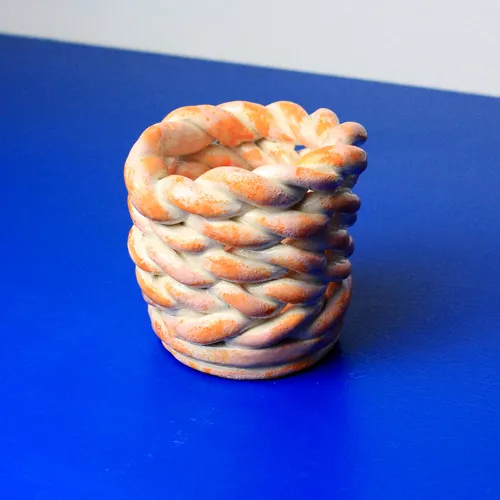
How the pieces look - The base of the pieces is white, due to the clay used (faience). As you will be painting with different coatings (engobes, high-fire paints and ceramic mines), the pieces will have color. In the workshop we have samples of the coatings, with and without glaze, to make your choice easier. Here we also use glossy transparent glaze and this will bring out all the colors.
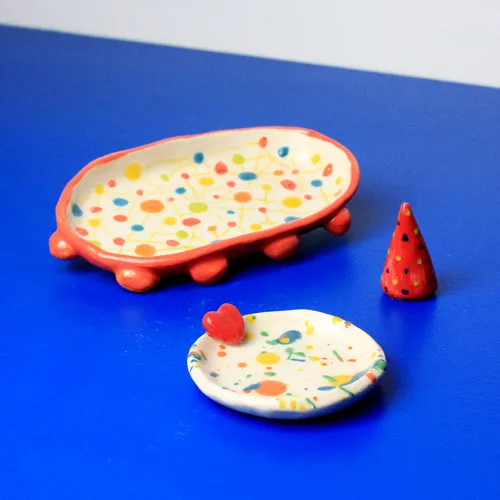
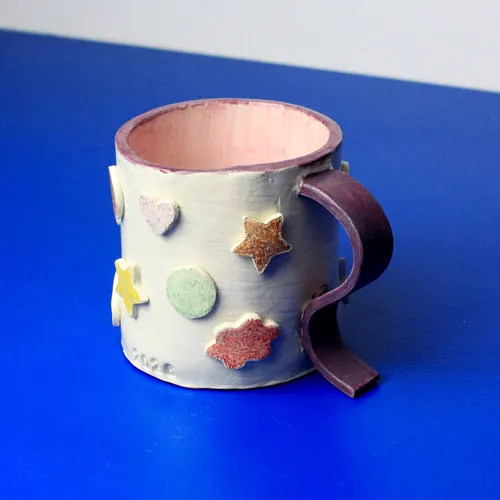
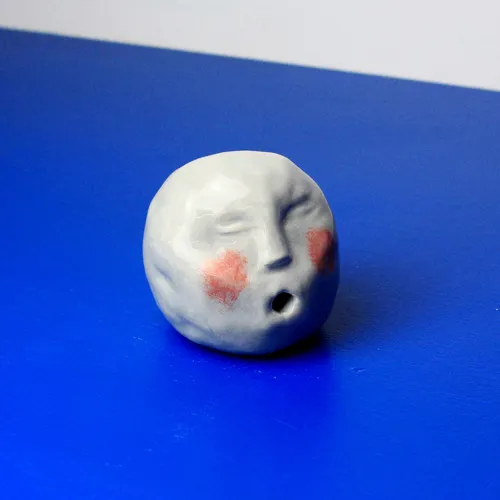
Find out more about CERAMICS WORKSHOP
In both workshops we used ceramic paste earthenware, The white color is produced by Graffito.
The comparison table between workshops
In this comparison table between Flash Workshop or Ceramics Workshop, we make a comparison - what it includes, duration, price - between Flash Workshop and Workshop, but we include a third workshop.
FLASH CERAMICS WORKSHOP
CERAMICS AND PAINTING WORKSHOP
CERAMICS WORKSHOP
Sessions
1 session
3 hours
1 session
6 hours (with break)
4 sessions (1/week)
11 hours in total
Price
60€
100€
165€
Forming Techniques
Lastra and Bola
Lastra and Bola
Ballast, Ball, Rolls, Busy Massif
Clay used
Earthenware (white paste)
Earthenware (white paste)
Earthenware (white paste)
Decoration
❌
✅
✅
Glazing process
❌
❌
✅
Pieces you build
2 pieces
Minimum 1/technique
2 pieces
Minimum 1/technique
4 pieces
Minimum 1/technique
Are they baked and glazed?
Yes
Yes
Yes
Ready for collection
In 3-4 weeks
In 3-4 weeks
In 1-2 weeks
Previous experience required
No
No
No
How parts collection works
Whether it's the Flash Workshop or the Ceramics Workshop, the pieces don't leave with you on the day. After you build them, they need to dry in the workshop, go through the first firing (slaking), and then the second firing after glazing.
In the Flash Workshop, this process is done by us, glaze included. On average it takes 3 to 4 weeks after the workshop. We'll let you know when the pieces are ready to be picked up.
At the Workshop, we fire the pieces between the 3rd and 4th session. You glaze your pieces yourself in the fourth session, with our guidance. The final firing is done by us after that session, and the pieces are ready in 1 to 2 weeks.
Flash Workshop or Ceramics Workshop?
Choose the Flash Ceramics Workshop if:
- You've never worked with clay and you want to find out if it's for you, with no big commitment
- You have 3 hours to spare and don't want to plan 4 visits (once a week)
- You want to give someone a workshop (it's one of the most common gift options we have)
Choose the Ceramics Workshop if:
- You want to understand the whole process, not just modeling, but also decorating and glazing
- You've already done the Flash Workshop and want to go deeper
- You know you want to continue in ceramics and you'd rather invest in a more solid foundation from the start
A practical note: the Workshop has one or two classes per month, depending on the season. In the summer months, demand is lower, and there may not be any.
You can see the available dates for both formats at upcoming dates.
How to choose the right workshop for you?
This article briefly explains what you learn and the difference between ALL ceramics workshops
Frequently Asked Questions - Flash or Workshop
What is the main difference between the Flash Workshop and the Ceramics Workshop?
There are several differences, but the main one is related to the phases of clay. In the Ceramics Workshop you can follow almost the entire process: you start in the plastic phase, and in the fourth session you're glazing pieces that have already been fired for the first time.
Can I paint the pieces in the Flash Ceramics Workshop?
No, you don't paint the pieces in this workshop. You will learn two hand-forming techniques: balling and balling. The pieces are the same color as the clay: white.
What do Flash Workshop and Ceramics Workshop have in common?
Theoretical introduction to ceramics: types of paste, firing, decorations and glazes. And two manual forming techniques: balling and balling.
Do I need to do the Flash Workshop before the Ceramics Workshop?
No. They are independent formats, both for beginners who have no experience.
All the ceramics workshops can be taken independently, without the need to follow a specific order or have taken part in others before.